Merino Sheep

This is a polled Merino Ram from South Australia. If you would like to buy some semen from this ram go to this  website.

This is a polled Merino Ram from South Australia. If you would like to buy some semen from this ram go to their website http://www.northashrose.com.au/pages/sales/semen-sires-2.php

We have already talked about what cattle and chickens we want to raise, so now I want to mention the sheep we would like to get. We have decided on raising Merino sheep because they have been regarded has having the finest and softest wool of all sheep and the yarn that is made from their wool is the yarn my wife loves to knit with most. My wife loves to knit so much she has created her own knitting website Purl, Too. She wants to raise sheep so she can spin her own yarn and sell Merinos and their yarn to other small homesteaders and people who want good quality dye free yarns on her website. Check it out.

Merino Ewe and Lamb

Merino Ewe and Lamb

The Merino are one of the oldest breeds of  sheep in the world. Merino sheep originally were developed in Spain, during the Middle Ages,  Spain’s wealth was based on the fine wool Merino sheep. They were  protected by the Spanish government and it was a capital  offense to export a Merino sheep. In 1809, Napoleon’s invasion of  Spain opened to the  world access to the prized Merino sheep. The Merino wool is of  superior quality.  It is the most luxurious wool in the world. It is bred predominantly for its wool, and its carcass  size is generally smaller than that of sheep bred for meat, which makes them perfect for a small grass based farm. These sheep are noted for their hardiness and are excellent foragers and very adaptable. They have great herding instincts and have been used as parents of several other breeds. Merinos also have a very long productive life, sometimes living for up to 12 years and usually give birth once a year to one or two lambs.

My friend Tom’s brother is starting to raise sheep and are keeping them at Toms place. When I was there in May my friend John and I helped him set up a pin for a Ram he had just bought.

The Pin we helped set up/

The Pin we helped set up/

The pin is only a temporary holding pin until he gets his fencing done. I loaned him my tractor so he could finish putting in the rest of his fence.

My tractor and post hole digger I loaned my friend

My tractor and post hole digger I loaned my friend

Tom helps his brother care for and watch over the sheep while his brother is over the road as a truck driver. The breed they raise are  Hampshire’s crossed with Suffolk . This breed is a very large sheep that is known for its fine-grained quality meat that grows very fast and are very fertile. Right now all they have are two ewes that have two baby lambs and one ram. He will put the ram with the ewes this August so they hope to have 4 new lambs in January. His plan is to sell show lambs to people who farm and their kids who want raise and to show lambs in FFA and 4H projects. The lambs that are not quiet show lambs will be sold around April for people who want some lamb for Easter.

What Toms sheep look like.

What Toms sheep look like.

This is a picture of my friends Tom on the left and John on the right.

This is a picture of my friends Tom on the left and John on the right.

I have been looking on-line for breeders who we might buy Merino sheep from when we retire and start farming two years from now, but have not had much luck. If anyone knows of any Merino sheep breeders close to Iowa please let us know.

Posted in Sheep | 6 Comments

Farm Report May 6 2013

Milligan's Gander Hill FarmSorry I haven’t posted in a while because we bought a Class A Motor home that  has been a lot more work then I had planned on. It has sure been a lesson in what to look out for when buying a Motor Home and I will do a post about it some day to explain all the stuff I had to do to this thing.

Recently a friend of mine Johnny Copsy and I went to the farm to check on things and see  how the trees fared during the winter and to see what damage the recent flooding did on the farm in April. My wife couldn’t get the time off work so I talked my friend into helping me out.

The drought is officially over in Iowa. The farmers were concerned about the ground moisture going into spring, but with all the rain, snow, and flooding there this spring that is no longer a concern. I got there on Monday May 6th but on Friday May 3 they had 12 inches of snow on the ground, but it was all melted by the time we got there thank God

The first thing we did when we got there was to get out the tractor and drive down to the bottom ground where the trees are planted and check on them. I let John drive my tractor (That’s how I talked him into helping me) and I drove my pickup truck there with all the new pvc stakes that I brought with us to change them out with the bamboo stakes that are on our tree tubes that are starting to rot. I didn’t get more than ten feet on the bottom ground before I got the truck stuck. The tractor wasn’t having any problem so I thought the truck wouldn’t either but I was wrong. We went to the neighbor and borrowed a chain and the tractor had no problem pulling the truck out.

My tire tracks where I was stuck in the mud.

My tire tracks where I was stuck in the mud.

The tree tubes in the front section looked pretty good a coupe stakes had broken and the tree tube was still there being held in place by the tree that was still inside.

You can see the little Northern Pecan seedling to the left of this pvc stake that had its tube missing. This tree was planted last year to replace one that had died. It hadn’t grown much from last years drought.

Some of the tubes were also missing, but the tree was still there, so I put a pvc stake to mark where it was at so we wouldn’t accidentally mow it over and it would help mark the row. I think I may have made a mistake by doing this because I know deer are curious and they will come over to check out the white pvc stake and see this little tree and it won’t be long before they  figure out were there is a pvc stake marks a young tasty tree. I am not too worried during the spring and summer with all the fresh new grow of vegetation for the deer to eat but come fall I may move the stakes a couple of feet to one side of the tree in the row so it don’t mark exactly were the tree is. I also may spray on a chemical called Deer Guard that makes the trees smell and taste horrible to deer this fall.

I noticed from debris piled up against the tree tubes that the flooding was about a foot higher this year than it was in 2010.  When we got back to the very back part of the property were we had planted trees,  half the tree tubes were either gone or knocked over. The trees were all still in place were the tube used to be and the ones knocked over were being held in place by the tree. We went about removing the knocked over tree tubes from the trees and we staked out the spots with a pvc stake. I couldn’t put the tube back over the tree at this time because they had mud on the inside and were too dirty to reuse. I will clean them up this fall and may put them back on in October so the deer and mice can’t get to them this winter.

This is the picture from last spring, you can see how many more tree tubes we had compared to whats left this year.

This is the picture from last spring, you can see how many more tree tubes we had compared to whats left this year.

The after picture of what was left of the tree tubes.

The after picture of what was left of the tree tubes.

I am not distraught because we lost very few trees, just tree tubes. The tree tubes have done their job and without them the trees would not have survived up to this point. Most of the trees have now had over two years of growth. I don’t have to mow around them any more to keep the weeds down because the root system on the trees are now deeper then what the weeds are.

For the trees with tree tubes still standing we added a pvc stake to the existing bamboo and tube. We got lazy and did it the easy way instead of pulling out the old bamboo stake.

You can see here where we just ponded in a pvc stake next to the bamboo stake and then used zip ties to attach to tube and both stakes.

You can see here where we just pounded in a pvc stake next to the bamboo stake and then used zip ties to attach to tube and both stakes.

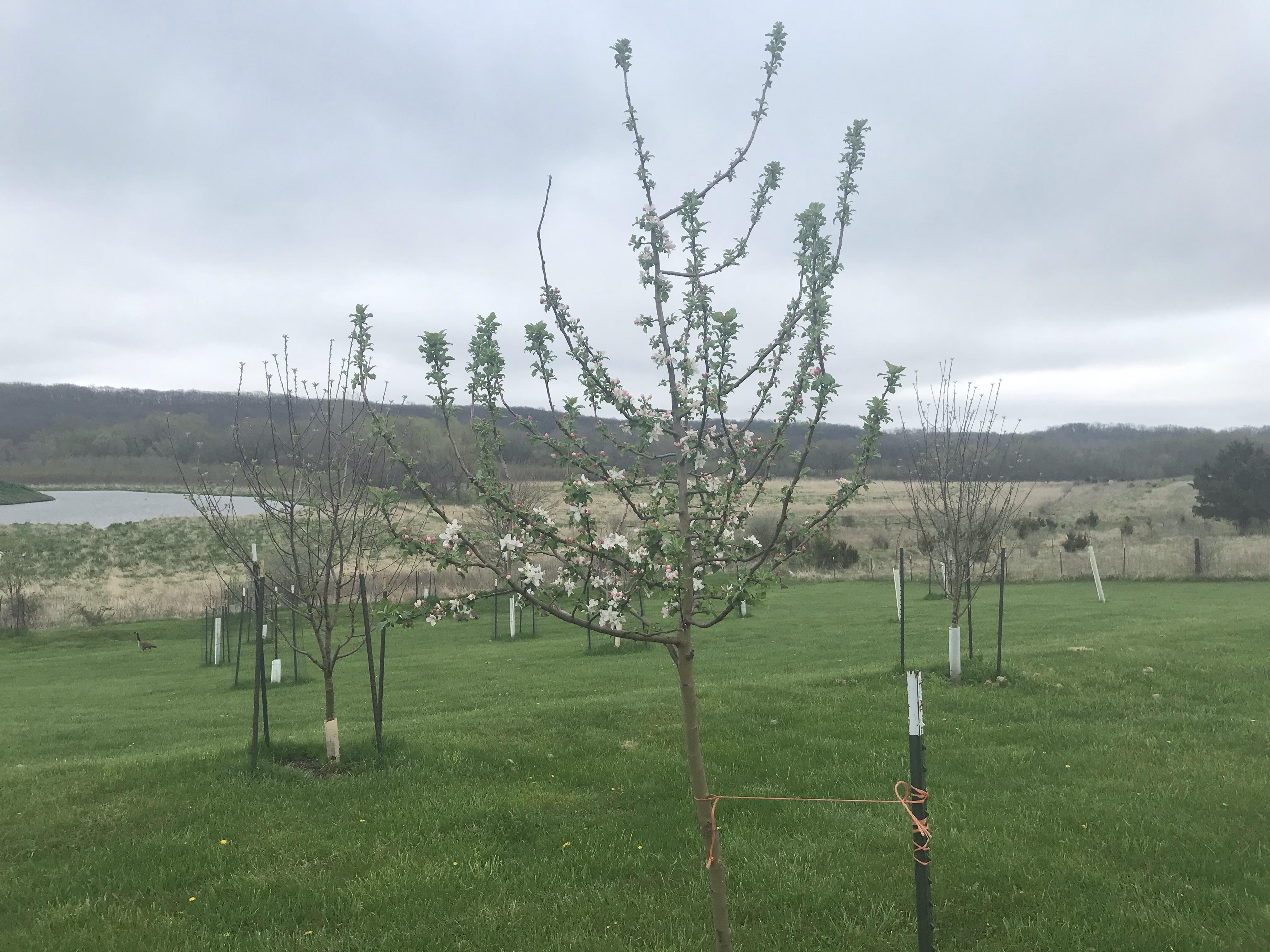
The fruit trees we planted last spring are looking very well, thanks in part to my friend Tom who watered them for us all of last summer during the drought.

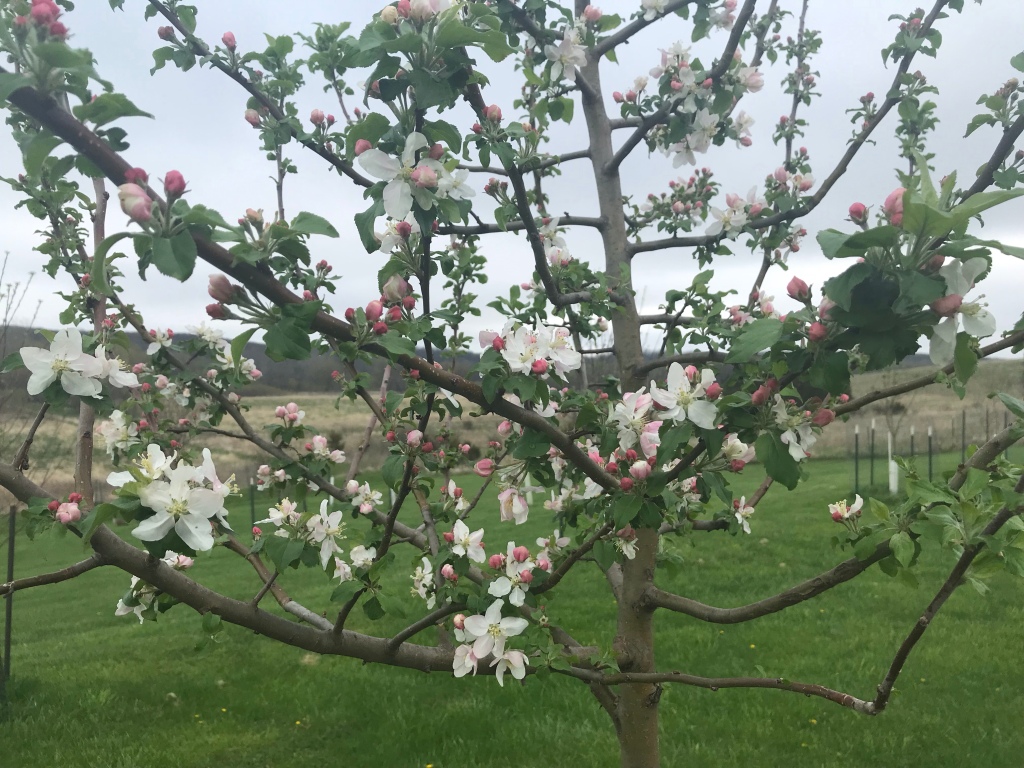
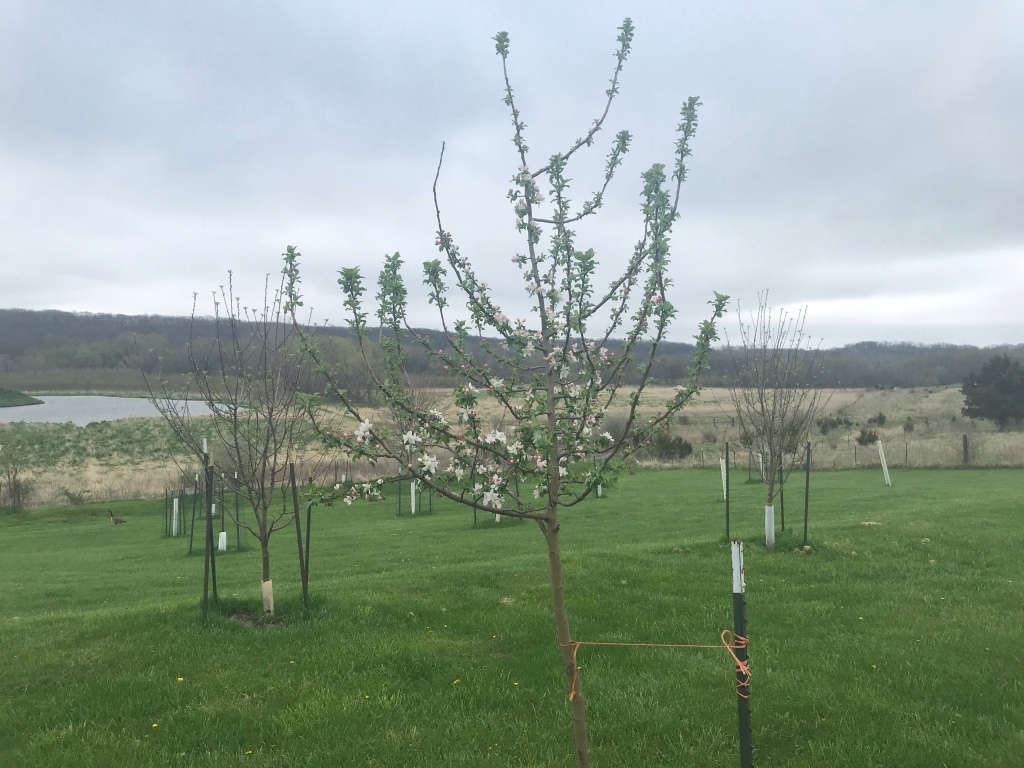
We planted 2 peach, 2 cherry and a pear tree last spring, along with 3 apple trees we planted the year before.

We planted 2 peach, 2 cherry and a pear tree last spring, along with 3 apple trees we planted the year before.

The shade trees we planted last spring up on the building site are also doing well.

We planted one Colorado blue spruce and several varities of maples that will add brilliant fall colors on the building site.

We planted one Colorado blue spruce and several varieties of maples that will add brilliant fall colors on the building site and put them in tree tubes to help protect them against critters. You can’t put pine or spruces in tree tubes.

All in all the farm is coming along nicely and we are still counting the days when I retire and move there for good. Until next time, that concludes this farm report.

Posted in Farm Report, Tree tubes | 6 Comments

How One Man Built His Pole Barn House.

Milligan's Gander Hill Farm

Blake’s 30x56x14ft high wall pole barn house.

One of my readers Blake who commented on the post I did about pole barn house told me he had just finished his pole barn house and  he had put in a lot of things that I was planning to do. I wanted to see his place and emailed him to see if he wouldn’t mind sharing some pictures of his build and answering some questions on the building process. He said he was happy to answer any questions I might have and would send me lots of pictures of his place. I knew others who are thinking about building their own pole barn house would be interested in these too, so I convinced him to let me do a post about his project. In this post we will go over the entire building process of Blake’s house and get some questions answered so all of us will get a better understanding of what this all entails.

Blake’s house is built near the town of Many Louisiana by the Texas border in the middle of the state, and was built as a vacation home on a lake that Blake and his family use on the weekends and vacations. It is about a three-hour drive from his current home. Like most people who decide to build these types of homes he had a contractor build the outside and then he did all the rest of the work in his spare time. Blake said ”it took two years and it was only on the weekends. I also did it cash only, so that dictated the speed of the build as well.”

Front porch of Blake's home.

Front porch of Blake’s home.

When asked I asked him what he did for a living? He said “I am an MRI Technologist. I practiced full-time for 15 years then managed to weezle my way into the executive/ownership side of a multi site medical imaging company.” He said he had  ”Zero construction background, but have always been handy.” When asked how long did you plan your home build? “ I went thru several different options and pricing before deciding on a pole barn. I read a lot of post in the Garage Journal forum as well as others. Intensely planned for about 4 months before being completely confident” Blake said.

“I think this is one of the easiest and quickest methods of construction.  The most difficult part is constructing the shell, it must be square and plumb (no secret here) Blake said.” “I think someone with modest skills must research and must have (rent) the proper equipment or at least a tractor with a front end loader, forks, and an auger.”

Convincing his wife might have been the hardest part of the project. “The kids love the loft and spiral staircase. The wife was skeptical of the concept, but now thinks it is nicer than our main home and loves the rear deck, tongue and groove walls, solid granite counter tops in the kitchen, and old barn cypress cabinets (that are not yet complete)” Blake said.

The garage is 30×16 and the living area is 30×40

First Things First

The first thing Blake did was get a permit for the building and do a perk test for the septic system. To prep the site He had to remove 8 trees and three old stumps before bringing in 20 loads of a sand/clay mix for the “house pad”.

The poles were spaced 8ft apart on center and the part in the ground had a PVC sleeve over them so the post wouldn't rot.

The poles were spaced 8ft apart on center and the part in the ground had a PVC sleeve over them, that helps keep the post from rotting or getting eaten by termites.

“Poles are 4 feet into the ground. The soil is very compact clay and we did not use any concrete around the post.” Blake said. “Just a gravel base.”

Close up of the PVC sleeves and you can see were Blake used scissor trusses over the living area and regular trusses over the garage area. It still keeps the roof line the same on the outside.

Close up of the PVC sleeves and you can see where Blake used scissor trusses over the living area and regular trusses over the garage area. It still keeps the roof line the same on the outside.

He used a 2×6 treated base board and 2×6 girts two feet on center, then did the framing for the windows and doors. After the contractor finished the outside frame is when Blake took over. ”I had done a rough plan of the plumbing before construction was started, but that changed a little when I started putting them in the dirt” Blake said.

Rough in Plumbing

Plan where your bathrooms and kitchen will go before construction starts.  You will need to know where your sinks, toilets, and washing machine will be so you know where to dig to put  your sewer line. Having your drain lines, toilet drain and vent stacks in place and sticking up and caped so no dirt or cement gets in them is a must before the concrete is poured.

I put a few 3/4″ electrical conduit 90′s in the exterior wall portion of the concrete pad for future electrical runs if I need them, had the dirt pad treated for termites before concrete, and used wire mesh in the fibercrete slab” Blake said. “I only used a plastic vapor barrier, no need to insulate under the slab this far down south.” Notice in the picture above the strings to show where Blake plans to put interior walls.

After the slab is poured

After the slab is poured

Framing interior walls

Milligan's Gander Hill Farm

Spray foam insulation really stops all air infiltration and really makes the pole barn house more energy-efficient.

After finishing the concrete pad Blake started framing the interior walls. He framed it as you would a regular stick built house. Another option for framing the outside walls would be the bookshelf method that uses even less lumber. After running all his electrical wiring he then had a contractor spray the foam insulation. “We had open cell spray foam sprayed directly to the metal siding (3″) and metal roof (4″) which makes for a very efficient building. The foam also cuts the noise from rain to levels of a shingle roof” Blake said. From here on out the building process is no different then building a regular home.

Sleeping Loft

Sleeping Loft

Finishing interior walls

Milligan's Gander Hill Farm

In the kitchen area that will be mostly covered up with cabinets he used drywall.

Having a good lighting plan before construction is started makes the whole project go much faster.

Having a good lighting plan  that includes knowing were all your lights, receptacles, and switches go before construction is started makes the whole project go much faster.

He then used tongue and groove knotty pine siding on the rest of the walls.

Milligans Gander Hill Farm

He then used the same siding on the ceiling.

Box beam to hide where the seem comes together on the ceiling.

Box beam to hide where the seam comes together on the ceiling

Last but not least

Milligan's Gander Hill Farm

For the flooring Blake chose to go with tile for the kitchen and bathrooms and Laminate flooring for the living room, and everywhere else.

spiril stair case.

He then put the spiral stair case for the sleeping loft in and trimmed the house out with knotty pine trim. Now all he has to do is finish up the kitchen cabinets, counter top and add appliances and he will be done.

“The cost of the whole thing will be right at 80K after I get the cabinet doors back from the cabinet maker. This came out less than my estimate of 90k when I first started” Blake said.

When I asked  him if there was a chance to do things over again what would you do different? he said “Of course I would have gone a little bigger! I also would have spent more time in the planning stage with the window and door placements. The poles dictated where a few of my windows and doors had to be placed, this never occurred to me during planning. I ended up having to cut one post for the kitchen window and using long 2×12′s above and below the cut connecting the adjacent poles to reduce any structural issues. I also had to move another post over by 1 foot in order to fit my large living room window (went from 8ft on center to 9ft between those two poles).   I had to actually leave one window out of the build in the living room area and had to choose sides of a pole that ended up right in the middle of my bedroom wall. These situations could have been accounted for if I had only realized it before hand and planned accordingly.”

Blakes ceiling fan

What a great example of pole barn house that is maintenance free, and that I think will stand the test of time. I want to thank Blake for sharing this with us. I hope you all have learned something on how to build a pole barn house, and are a little more confident to take on your own project, I know I am.   If you have any questions about the building process feel free to ask them here.

Blake has sent more pictures below of his home that some of you have requested.

z interior 002 z interior 003 z interior 004 z interior 005 z interior 006 z interior 007 z interior 008 z interior 009 z interior 010 z interior 011 z interior 012 z interior 013 2 z interior 014

Posted in Pole Barn House | 8 Comments

Iowa Blue Chickens

Iowa Blue Chickens

While we are planning our pole barn house we are also deciding what animals we want to raise and what animals that are best suited for our land. We have decided we want to raise heritage breeds. Animals that were raised by my great grandfather and in Europe and the United States before 1960. Heritage breeds are better foragers and hardy souls that will do well on their own. We knew we wanted to raise Scottish Highland Cattle, but we didn’t know what chickens we wanted to raise until I was reading my March issue of Hobby Farm and came upon an article about raising chicken breeds best suited for your region.  For the Midwest one of the breeds mentioned was the Iowa Blue Chickens. Until that article I had never heard of the Iowa Blue chicken, so I did some research and found the Iowa Blue Chicken Club and their website and found they had a lot of information about the Iowa Blue.  I found it to be a fascinating breed with an interesting story that I wanted to share  with my readers. In this post I plan to tell you the story about how this breed was developed and how they came back from the brink of extinction and why you might want to add this bird to your flock.

Iowa Blue Hen

Iowa Blue Hen

The Iowa Blue is the only breed of chicken that was developed in Iowa and was first developed in the early 1900′s around Decorah Iowa by a man named John Logston. This dual purpose breed was developed to be something more than just a meat and egg chicken. The small farms of its day needed chickens that could forage for most of their own food for most of the year and had to be able to reproduce and raise their young on their own without much help and be able to defend against and out smart predators.  This breed could do those things and was sold by several hatcheries in the Northeast part of the state through the 1960′s until the hatcheries went out of business. The hatcheries went out of business because small family farms were going out of business as the industrialized farming industry was taking hold. The average size farm went from 200 acres to over 400 acres and for the industry to be profitable they had to specialize in one or to crops or animals and not be as diversified as the smaller farms were. From 1950 to 1970 this country lost half it farms with 10 million people leaving the farm to move to the city. Back in 1900 98% of the farms in this country had chickens, by 1992 only 4% had them. This slower growing and self-sufficient breed and others like them did not appeal to the factory farms that specialized in chickens and were pushed aside for the faster growing and better laying hybrids and the Iowa Blue was nearly lost.

When this breed was first developed in the early 1900′s most towns had their own small hatcheries and back then they didn’t ship birds much. Most people came to the hatchery to pick up their chicks. So the Iowa Blue hadn’t expanded much beyond the southeast part of the state. By the 1980′s there were only two known flocks left in existence and if not for the efforts of one man and a small group of dedicated breeders this breed might have gone the way of 200 other heritage breeds of livestock that have gone extinct in the last two decades around the world.

Iowa Blue Chicken

Iowa Blue Chicken

Ken Whealy of Decorah based Seed Saver Exchange heard about the Iowa Blue on a campout with other fellow group members and went to look for the breed at the family farm of Micheal Moore the grandson of John Logston the developer of the Iowa Blue. The grandson had taken over the family farm and had contuinued raising his grandfathers Dexter cattle and had many other chickens, ducks, geese, pheasants and hogs. He said he only had 6 Iowa Blues left, he had about 50 the year before but they had gotten in some bad oats and most had died and some hogs had killed a few. All that was left was one old rooster named Herman and 5 hens that hadn’t had any eggs hatch in a few years. Michael was concerned for the breed and gave Ken the Rooster and the five hens to try and save the last of the Iowa Blues. The Rooster was too old and wasn’t fertile anymore so he asked Mr. Moore if he knew of any one else who might still have a flock of Iowa Blues and he only knew of one other person. His grandmother Dolly Logston had sold a few to a man named Ransome Bolson by Northeast Decorah in the 1960′s.  Ransome did have a flock of about 50 birds and with these two known flocks of Iowa Blues they were able to save this bird from extinction.

How The Breed Was Developed

The folklore about the development of the breed is where this story gets interesting and was told by Mr. Logston’s widow, Dolly. The development of this breed came about by accident. She said that a white Plymouth Rock hen went broody and went under a farm building to nest and came out with a clutch of chicks that were solid chestnut to stripes that no one had ever seen before, they looked like pheasants. They thought the chicks were sired by a pheasant.

You can see how the baby chicks look like young pheasants.

You can see how the baby chicks look similar to young pheasants.

This  would  explain the color of the chicks and why the breed does so well foraging for itself and is said to be very hardy and well suited for the weather in Iowa with the very hot and humid summers and the very cold winters. The breed is an insect control champ and the roosters and hens are also great at self-defense according to Kari McKay-Waddel, Vice President of the Iowa Blue Chicken Club who raises Iowa Blues on her farm. She has said to have seen on several occasions the Iowa Blue defending itself successfully against several hawk attacks and other predators such as cats and opossums.  The roosters get to about 7 pounds and the hens about 5 and they lay medium sized eggs that are brown to light cream in color.

Iowa Blue eggs

Iowa Blue eggs

With people once again moving back to the country and starting small family farms the need for this kind of chicken is growing. The Iowa Blue is now making a come back thanks in part by the promotion of the Iowa Blue Chicken Club. If you would like to be part of the rescure effort of this bird and would like more information, please go to their website at
http://www.iowabluechickenclub.com/

Posted in Chickens | 23 Comments

Pole Barn House Plans

Picture of my neighbors pole barn house.

Picture of my neighbors pole barn house.

As much as I keep wishing my retirement day would get here soon, I am also glad it’s not. I know I am not ready, I have so much to learn yet, not just about farming but also building our pole barn house. With me planning to do most of the work on our house, I have to learn every aspect of building this type of home not just the construction, but everything from the  plumbing system to radiant floor heating to name a few.

We are building a style of pole barn house that will take advantage of this view of Gander Hill Pond.

We are building a style of pole barn house that will take advantage of this view of Gander Hill Pond.

The most perplexing thing about coming up with plans for building our dream home is the house I am dreaming of doesn’t yet exist. At least I have not found one like it any where to get plans from, but nothing can discourage or deter me from turning our dream into reality. I have searched all over the  internet  and the lack of information for pole barn construction for residents has been frustrating and has caused me uncertainty in our own design plans. My hope through these post I do about our house will be a source of information for others and will give them the confidence to move forward in their plans

I have found  from the post I did  Pole Barn House that there is a lot interest in these types of homes, because like me, people are looking for good affordable housing that takes just a few days to put up the shell and once done requires little maintenance. Most people who build these get a builder to build the outside frame and then they can finish the inside that is all enclosed and protected from the weather at their leisure. In these series of posts I will show you the style, floor plans, interior and the different components  of the pole barn house we are going to build.

Milligan's Gander Hill Farm

The pole barn we built on our farm last summer

The style of pole barn house we want to build.

Before I could work on floor plans, window placement, and other aspects of the home we needed to decided what style of pole barn house we wanted to build. We have decided to build a two-story house that will have a front porch, with windows, roof, trim, and doors all in white with green siding. The very same colors like the pole barn I did above, only it will look like the house below.

I got this photo from APB Pole Buildings and have a quote of 17,297.00 for materials to build this one. There are no windows priced in this quote

This is the front view of my house, but will have little different window and door placement then the one above. The front faces true south that will take advantage of the suns rays in the winter being lower in the sky and will shine in the windows and warm the polished brown stained concrete floors that will act as thermal mass and will keep releasing heat even after the sun goes down. The house will be protected by the higher summer sun with the 6 ft front porch for the first floor windows and a two foot overhang for the upper windows. The white roof is supposed to last longer and also help keep it 25% cooler in the summer reflecting most of the sun rays.

In order to build a two-story house, you do have to have more of a beefed up foundation then just a precast concrete pad in the bottom of your post holes because of the weight of the second story. On a gabled roof house like the one above, the post on the eave side or in this case the front and back side of this house carries the weight of the roof trusses, roof, snow loads, and bigger portion of the weight of the second floor. The front and back will have 6×6 lam post that will be 8′ on center. The bottom of the posthole  needs a 26 inch wide by 10 inches thick  cast in place foundation to help distribute the weight of the structure. The gable ends of the house will not carry as much of the weight of the house, the post foundation only needs to be 18 inches wide by 8 inches thick. The posthole foundation you need for your pole barn will all depend on the style, soil type, frost heave, wind and snow loads for your area.

for the front the foundation needs to be poured into place 26 inches wide by 10 inches thick.

for the front the foundation needs to be poured into place 26 inches wide by 10 inches thick. This diagram call for 8×8 post but I was told by APB pole barns that because I will have a second floor I can get by with the 6×6 post.

The right side of my house that will face the view of gander hill pond I put at the top this post, will have a 8 foot deep full height gable porch which is nothing more than an extended roof line and will be a cheaper version of the picture of the house below that was done by New Energy Works who designs and builds timber frame homes.

New Energy Works designed home

Our home will not look as grand and beautiful as this one, but it will be affordable. Our roof will not be as steep as this one with only a 4/12 or 6 /12 pitch. Our windows will also not go all the way up to the roof line. You can see below of the drawing I did of how this side of our house will look.

Pole barn drawings

I think you can get the general idea how our house will look and the next post will be on the floor plans. Don’t forget if you want to follow our progress on our pole barn house sign up by email to follow this blog on the right side of this page towards the top, hit the follow button then you will get a confirmation email and you have to click that to follow.

Posted in Pole Barn House | 8 Comments

Iowa Farms For Sale

th

I was just on some farmers blog and the farmer was talking about running out of things to blog about and I commented “Try having a farm blog and not be farming yet”. I do struggle to come up with stuff to post about and I have to be very creative to come up with interesting things so people keep reading my blog.  So I have come up with a new idea. Even though I am not in the market to buy a farm now I still love to look at farms that are for sale.  I have also noticed people who read farm blogs seem to be interested in that kind of thing too. My idea is to do posts every now and then called Iowa Farms For Sale. In these posts I will be featuring an actual farm that is for sale in Iowa and giving my opinion what one could do with them  if they purchased  it. Like I did on the post A Farm Of Interest. Please give me your feed back on this post,  I need every ones opinion on whether Iowa Farms For Sale is a good idea.

centerville farm 3

First Post

First up is a picture perfect post card of farm for sale just a few miles outside Centerville Iowa for $299.000.00. If I liked to deal with people ( which I don’t, that is one reason why I am moving to the country) I would buy this 1870′s farm and turn this 23 acre beauty into a Bed and Breakfast farm. This property and house has all the charm one needs for a good farm income and could double as a bed and breakfast

Centerville farm

As you can see from the sign above the property is on the National Register of Historic Places and it has been well-preserved by the current owners. The 23 acres are a mixture of pasture and timber with a 2 acre pond with 3 bridges and a gazebo. It also has a great looking barn.

48L_08

I would market this Bed and Breakfast farm to families with children in Des Moines, Kansas City, and Chicago as a National Registered Historic farm still farming the way they did back in the late 1800′s. I see parents wanting to show their children where food comes from and what farm life is like. The guest could participate if they chose to in some of the daily farm activities, like gathering the morning eggs  or could help or watch the milking of the cows. They could help with some of the morning chores like feeding the animals, there they would have a chance to pet the animals, I have noticed Kids really love that sort of thing.

centerville farm 2

Every thing served for the breakfast would have been raised, grown or made on the farm.

48L_09

48L_14

The house has 6 bedrooms and 2 baths.

48L_07

The house has a 6 acre yard so I would also have “Historic Farm Days” a once a year, two day event on a weekend where you would invite the people of Centerville and the surrounding communities to visit the farm for a tour of the historic farm and have a farmers market and invite other small farmers to come and sell their products too. You could have an exhibit of heritage breed animals like Highland cattle and  Gloucestershire Old Spot hogs and chickens that were grown back in the 1800′s and invite other farmers who raise other Heritage breeds to show their animals.

the-pigs

You could have a blacksmith there to demonstrate how they made horse shoes back then, or quilt makers workshop on how to make quilts. You could show how they made candles and soap back then too. You could have activities for families like hayrack rides, bobbing for apples, and cow pie throwing contest. You could even have a fishing contest for the kids with the kid who catches the biggest fish would get some kind of prize. You do this so the town folk know about you so when they have relatives that come to visit they would be more apt to recommend your Bed and Breakfast instead of the Super 8 or some other similar chain that is usually what is found in small towns in Iowa.

centerville farm 5

You could also have a farm store where you would sell your grass-fed beef, pork, and chicken for people who want healthy hormone, and antibiotic free meats. I would sell organic chicken feed and other items that small hobby farmers would need in the area. It is just some ideas what one could do if they were the proud owners of this property.

I don’t know if this property is still available but I found it on Land Watch.
http://www.landwatch.com/Appanoose-County-Iowa-Homesite-for-sale/pid/200155837

I hope you enjoyed this and please let me know if you did. Until next time please enjoy more photos of this property below

48L_21

48L_06 48L_12 48L_16 48L_23

Posted in Iowa Farms for sale | 17 Comments

Long December

Counting crowsOne of my favorite bands is the Counting Crows and my favorite song of theirs is a “Long December”. When I hear that song I realize It’s been a long December and I am hoping maybe next year will go by faster than the last. I hear other people talk about how fast this past year went for them, but for me… time just seems to drag. When you are not doing what your heart desires, the days just seem longer. I just want to start farming now, but I know I can’t just yet and must be patient, that day will come soon enough.

As I keep wishing that day will get here fast, I keep telling myself to slow down and enjoy this time now… hold on to theses days before they pass. My life is really good right now, my marriage to my wife is going great and I love spending time and doing things with her everyday. My health is good with no issues to speak of, other then maybe losing some of these pounds that I have picked up over the holidays. We have really enjoyed spending time with family and friends who are dear to us this past holiday season, so what I am saying is my life couldn’t be any better except if I was farming now. I  just need to keep reminding  myself to savor and relish this time in my life, enjoy each day and look at this time as a gift. I have lived long enough on this earth to know, life doesn’t always go so well. I know there could be bad times again and I will look back on these days with fond memories.

So I am hoping this past year was as good to you as it was for us, but if this has been a long December for you and you are hoping next year will be better than the last, take heart, bad times don’t last forever.

As we look forward to planning what will do on the farm this coming  year , my wife and I want to wish all of you well this New Year,  and please enjoy this video of the Counting Crows “Long December”.

Posted in Ramblings | 4 Comments